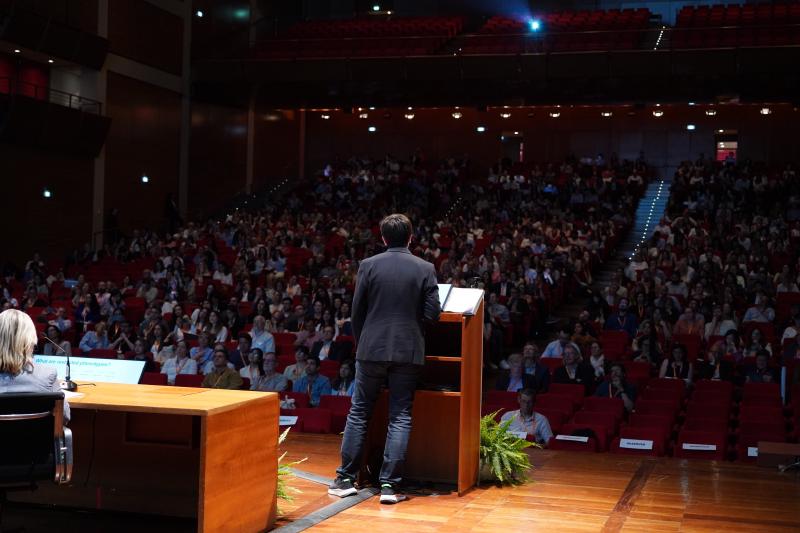
The ENCALS Meeting 2025 — the annual congress of the European Network to Cure ALS — was held in Turin (3–6 June 2025; Centro Congressi Lingotto). On behalf of the Motor Neuron Functional Unit at Bellvitge University Hospital, my participation spanned an oral communication in a plenary session and three posters.
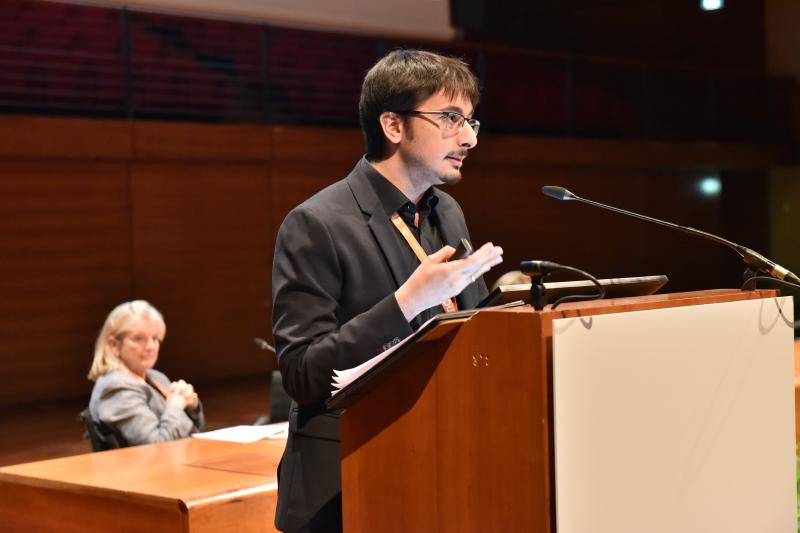
Oral communication — Examining the Cognitive Profile of Restricted Phenotypes in ALS#
Given in a plenary session on clinical characterisation, genetics and prognostic factors, the talk drew on the National ALS Register of Ireland. The work was carried out during a research rotation at the Academic Unit of Neurology in Trinity College Dublin under the direction of Prof. Orla Hardiman.
Most people with ALS decline over a couple of years; a few do not, and the restricted phenotypes are the clearest example — progressive bulbar palsy (PBP), flail arm syndrome (FAS) and flail leg syndrome (FLS), forms that stay confined to one region for far longer and carry a markedly better prognosis. These patients already have what every ALS therapy is trying to deliver, a brake on progression, which is what makes them worth studying in their own right: whatever underlies their slower course is a clue to how the disease might be slowed in everyone else.
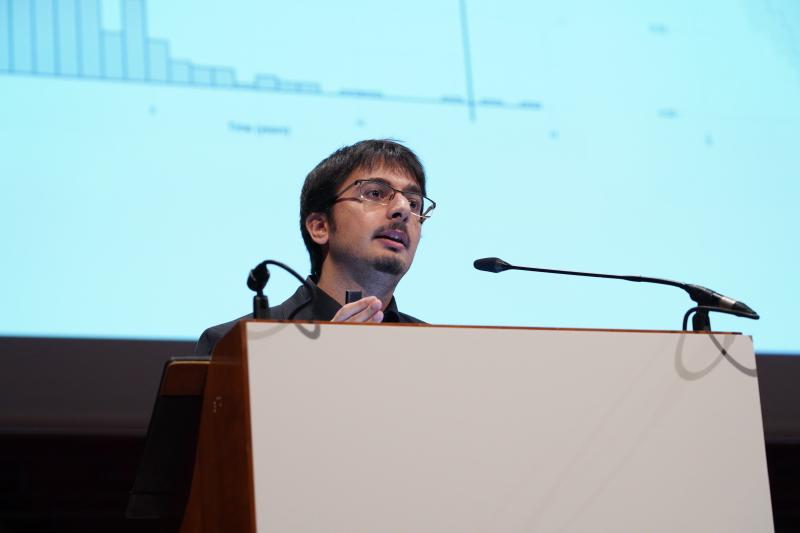
Rather than simply classify patients as restricted phenotypes, King’s stage was estimated at each visit from the register data, and phenotype-specific cut-offs for how long a patient stays in the earliest stage were set by a landmark-based threshold analysis of survival, tailored to each of PBP, FAS and FLS. So defined, restricted patients were younger at onset, progressed more slowly on functional measures and had longer diagnostic delays, with the sex balance and the length of that delay differing across the three subtypes. On cognition, cross-sectional ECAS scores placed them ahead of the rest of the cohort, with fewer falling in the impaired range; and when longitudinal ECAS scores were modelled with generalised additive mixed models (GAMMs), they not only started from a higher level but showed greater stability over time. The picture is of patients held back on both the motor and the cognitive side — and what does the holding back is the open question that motivates the work.
Posters#
The Role of Hormonal Exposure in ALS#
Whether a woman’s reproductive history shapes her ALS is largely unmapped. In 65 women with sporadic ALS from our clinic, greater cumulative hormonal exposure was associated with a later age at onset — an association that held after adjusting for menopausal status — and time spent pregnant pointed the same way, while contraceptive use showed no effect. Premenopausal-onset women were also predominantly spinal-onset. Hormonal exposure may push ALS onset later in women; the mechanism, and whether any of it is modifiable, is left open.
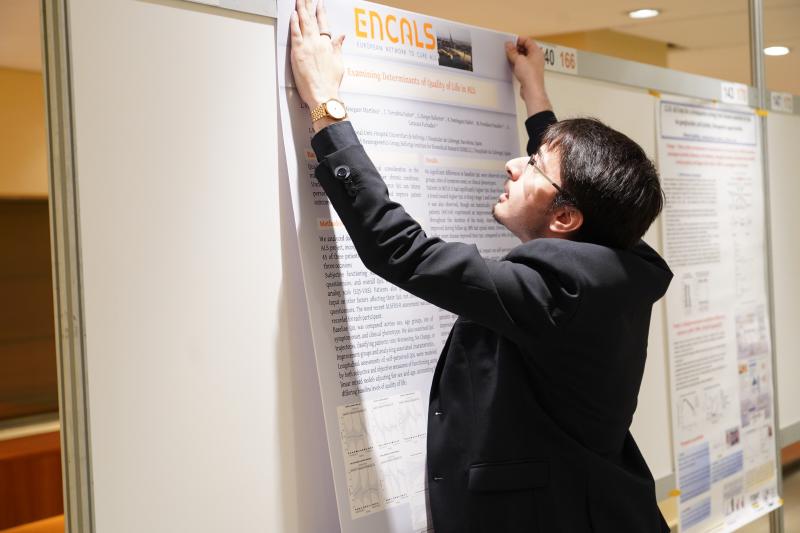
Examining Determinants of Quality of Life in ALS#
This poster looked at self-perceived quality of life across 144 patients in the PRECISION ALS cohort. Baseline quality of life did not differ by sex, age, site of onset or phenotype; what weighed most were activities of daily living, anxiety and depression, and mobility, with their relative importance shifting by sex and age. A third of patients reported better quality of life over follow-up — it can improve even while the disease worsens — and the respiratory subscale was the only ALSFRS-R subscale associated with it, most plausibly reflecting the benefit of non-invasive ventilation.
Validation of the PLSFRS in a Spanish MND Clinic#
The ALSFRS-R is the default instrument across motor neuron disease, but it was calibrated on the pace of ALS: against a disorder that moves as slowly as PLS, it may not be sensitive enough to register meaningful change over a reasonable follow-up. The PLSFRS was designed for that gap, and needed validation outside the group that built it. Ten patients with PLS were assessed by two independent raters, in person and over the phone: agreement was high across every subdomain and excellent for the total score. The practically useful part is that the scale held up by telephone as well as in clinic, which is what makes remote follow-up and multicentre use realistic.
The ENCALS Meeting is the annual conference of the European Network to Cure ALS; the 2025 edition brought roughly a thousand researchers and clinicians to Turin over four days for satellite meetings, plenaries, platform sessions and posters spanning ALS genetics, biomarkers, clinical trials and care.