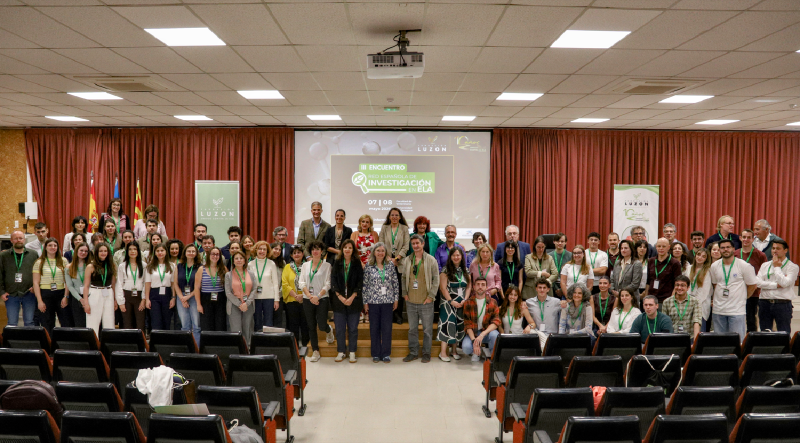
A talk presenting an update on the data collected in the Spanish ALS Registry and the analyses under way, given at the 3rd Meeting of the Spanish ALS Research Network (III Encuentro de la Red Española de Investigación en ELA; Zaragoza, 7–8 May 2026). The talk was part of the session “Current state of basic research: what we can do and what we cannot yet answer”, alongside talks on omics (Oriol Dols-Icardo) and disease models (Abraham Acevedo-Arozena).
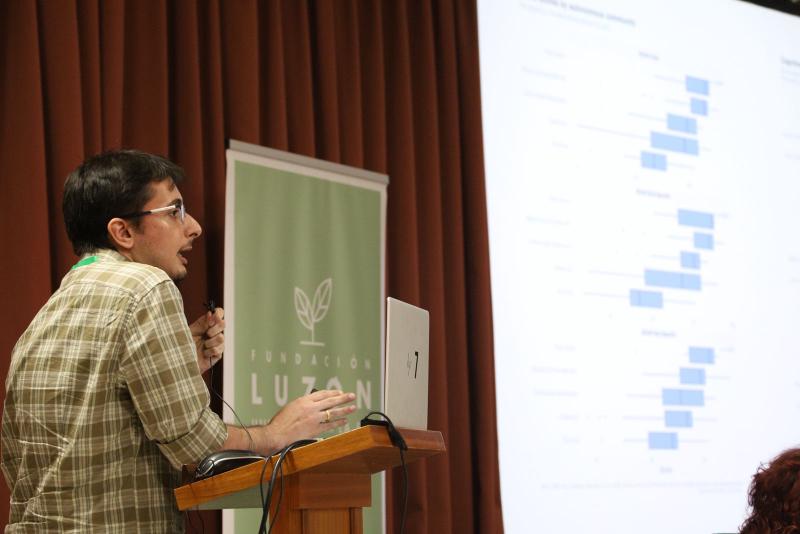
The registry, run by the Fundación Francisco Luzón within the GENRARE framework, already gathers 3,136 patients entered by 125 active researchers across 52 hospitals in 14 autonomous communities. The talk covered:
- Descriptive characterisation and cohort-wide figures — growth of the number of patients included, distribution by site of onset and by phenotype, and analysis of cohort-wide figures for diagnostic delay and survival (the latter somewhat longer than the European PRECISION-ALS reference).1
- Cognitive assessments — analysis of baseline ECAS scores, comparison across territories, and longitudinal analysis using linear mixed models.
- Effectiveness of riluzole — the registry data reproduce known findings: greater effectiveness in patients treated earlier, in those with a higher progression rate, and in those with respiratory onset.
- Real-world data on tofersen — stabilisation of the decline in ALSFRS-R scores when comparing the periods before and after treatment initiation in treated patients.
- Differences between autonomous communities — heterogeneity in progression rates across territories and in time to need for non-invasive ventilation, although data consistency must be established before attributing those differences to biological or care-related factors.
It closed with the registry’s future directions: improving the statistical analysis, advancing the automated ingestion of clinical data, digging deeper into territorial differences, and interoperability with European platforms such as PRECISION ALS.
The meeting, organised by the Fundación Luzón at the Faculty of Veterinary Medicine of the University of Zaragoza, brought together close to a hundred researchers over two days around the causes and mechanisms of the disease, diagnosis and patient stratification, clinical trials and emerging treatments, as well as focus groups, poster sessions, and oral communications. It also marked the formal constitution of the Spanish ALS Research Network as an association of research groups, with its statutes and governance structure agreed collectively.