Most criticisms of the ALSFRS-R concern measurement noise or statistical misspecification; multidimensionality is different — it challenges whether the total score measures a single coherent quantity at all. This article lays out what unidimensionality means, the factor-analytic evidence against it, and why aggregating across domains may be masking real treatment effects.
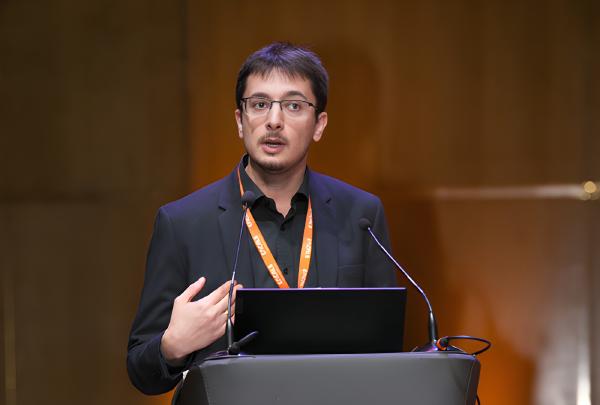
Participation in the ENCALS Meeting 2026 (Madrid) spanning an oral communication, three posters and a moderated session: a talk on moving from ALS registries to data-driven “digital phenotypes”; posters on the multidimensional structure of ALSFRS-R decline and what the total score costs trials, on residential air pollution (PM₁₀) as a modifier of functional progression, and on the dissociation between functional decline and quality of life; plus moderating the Epidemiology & Phenotyping session.
A structured tour of the ALSFRS-R: its twelve items across four functional domains, why feasibility and sensitivity to change made it the field’s standard outcome measure for twenty-five years, and a frank account of the psychometric limitations that have accumulated against it.
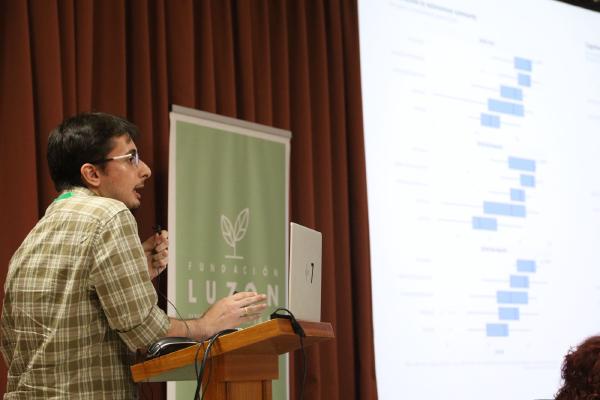
An update on the data collected in the Spanish ALS Registry and the analyses under way, presented at the 3rd Meeting of the Spanish ALS Research Network (Zaragoza): descriptive characterisation and cohort-wide figures, cognitive assessments (ECAS), effectiveness of riluzole, real-world data on tofersen, and differences between autonomous communities.
Clinical trials in ALS live or die by their outcome measures. This opening piece of the series frames the measurement problem in neurodegeneration — biological versus functional endpoints — and sets up why the ALSFRS-R became the field’s default answer to it.
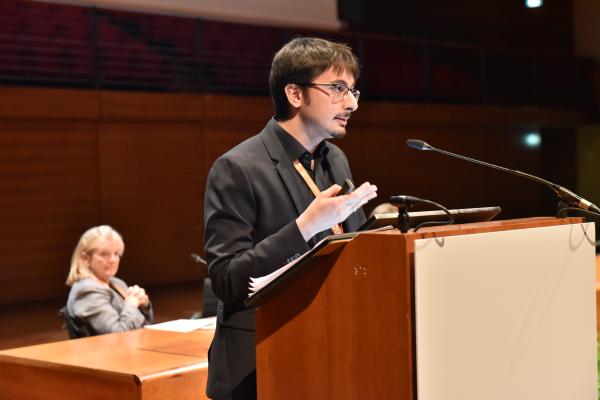
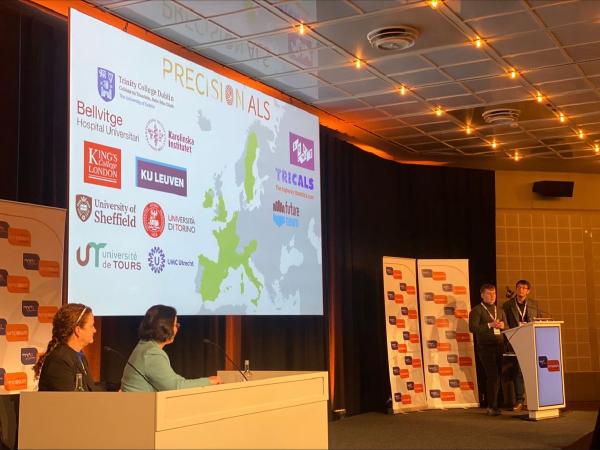
Participation in the ENCALS Meeting 2025 (Turin) spanning an oral communication and three posters: a plenary talk on the cognitive profile of restricted ALS phenotypes — progressive bulbar palsy, flail arm and flail leg — using the National ALS Register of Ireland; and posters on whether hormonal exposure delays age at onset in women with ALS, on what actually shapes self-perceived quality of life in the PRECISION ALS cohort, and on an independent validation of the PLSFRS for primary lateral sclerosis, including administration over the phone.
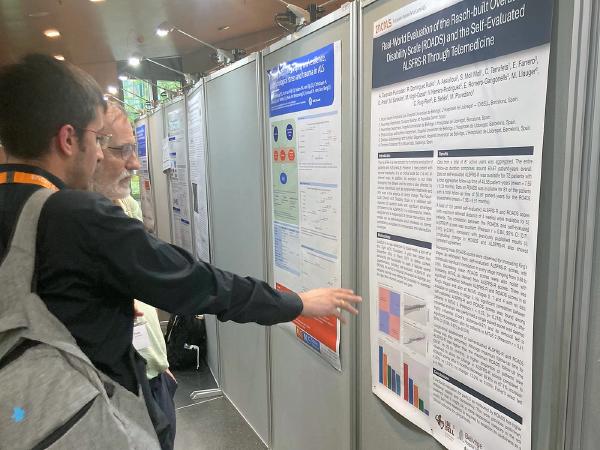
A poster at the ENCALS Meeting 2024 (Stockholm) putting the Rasch-built Overall ALS Disability Scale (ROADS) and the self-evaluated ALSFRS-R side by side in real-world telemedicine data from the LinkELA app: how closely the two scales agree, how that agreement holds across King’s and MiToS stages, and the first hint that ROADS registers change the ALSFRS-R misses.
A platform communication in Basel, co-presented with Harry McDonough, mapping the natural history of ALS through a time-to-event analysis of clinical milestones in 21,547 patients across the pan-European PRECISION-ALS cohort — including marked differences between care centres in when gastrostomy and non-invasive ventilation are started — plus a poster on LinkELA, the telemedicine app we use to follow our ALS patients from home in Barcelona.